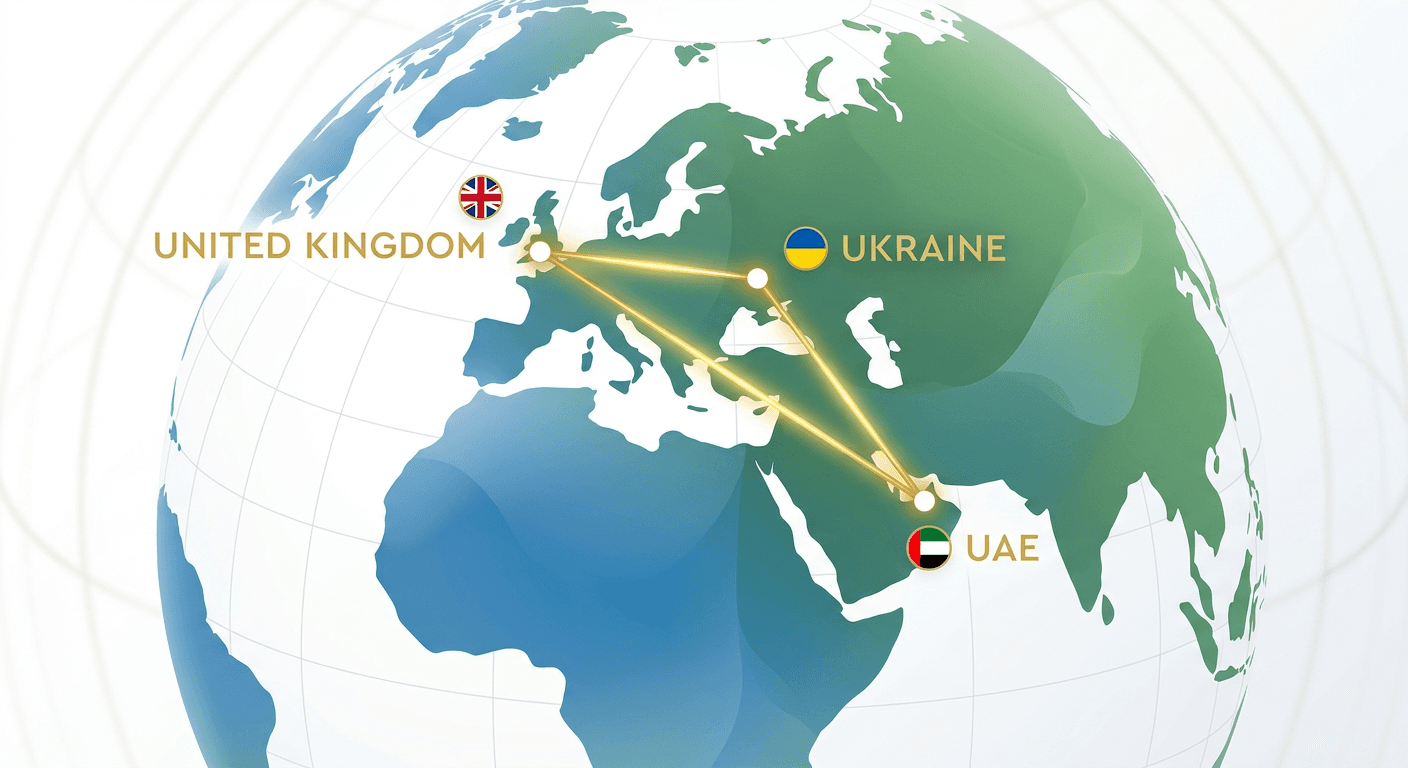
What Governs International Deals Today
Businesses often assume there must be a single, unified legislative act governing all cross‑border transactions worldwide. It would indeed be convenient — but no such universal law exists. And given current geopolitical and economic realities, the adoption of a global commercial code is highly unlikely.
Instead, every international transaction sits at the intersection of two or more national legal systems and, where applicable, international conventions or treaties. Typically, the relevant jurisdictions include:
- the supplier’s country
- the buyer’s country
- the manufacturer’s country
- the country where part of the performance occurs
When the parties do not choose the governing law, many legal systems apply conflict-of-laws connecting factors based on the closest connection between the contract and a particular legal system. In commercial contracts, such factors often include the location or habitual place of business of the party performing the characteristic obligation; in sales contracts, this is usually the seller, and in services contracts, the service provider.
International Conventions
UN Conventions (UNCITRAL)
- CISG (UN Convention on Contracts for the International Sale of Goods): Applies automatically to sales of goods between businesses in member states unless expressly excluded. Ukraine is a party; the UK and UAE are not.
- UNIDROIT Principles of International Commercial Contracts: Not binding by default, but widely used as a neutral, internationally accepted framework for drafting and interpreting commercial contracts. They apply only if the parties choose them.
Regional, Multilateral and Special Instruments
Instruments of a narrower or special application may also affect a cross-border transaction, regardless of whether the parties expressly mention them in the contract.
- Regulation (EC) No 593/2008 (Rome I) determines the law applicable to contractual obligations in civil and commercial matters in EU Member States, within its scope of application.
Special conventions are instruments that regulate specific aspects of cross-border transactions:
- CMR Convention (UNECE — UN regional commission) — governs international road transport of goods.
- Montreal Convention (ICAO — UN specialised agency) — governs international air carriage of cargo and passengers.
- Sectoral agreements — aviation, energy, telecommunications, and other regulated industries.
Notably, both the CMR Convention (road transport) and the Montreal Convention (air carriage) regulate mainly the carrier’s liability for loss, damage, and delay, including the measure of damages and compensation limits. They do not govern commercial matters such as transfer of title, passing of risk between buyer and seller, payment terms, or formation of the underlying sales contract. Their scope is limited to transport-related obligations and documentation, yet they may apply to a carriage contract even where the carriage forms only part of a broader commercial transaction.
Bilateral Treaties: UK–UAE, UK–Ukraine, Ukraine–UAE
A key point for businesses trading between these jurisdictions:
None of these country pairs has a bilateral treaty that harmonises the substantive rules on formation and performance of international commercial contracts in a manner comparable to CISG.
Existing bilateral instruments focus on:
- double taxation
- investment protection
- air services
- sector‑specific cooperation
- judicial assistance
The most commercially relevant remains the Ukraine–UAE Treaty on Judicial Assistance and Recognition & Enforcement of Court Judgments (2023). This treaty, however, governs procedural cooperation and enforcement, not contract formation or performance.
To sum up, commercial contracts between these jurisdictions ultimately depend on party autonomy, national law, international arbitration conventions, and bilateral judicial‑cooperation treaties, rather than any harmonised substantive commercial rules.
National Legislation Governing International Transactions
United Kingdom
UK law gives parties broad autonomy to choose governing law and jurisdiction. If the contract is silent:
- Rome I Regulation (retained in UK law) applies when the situation is connected to the UK and another Rome I jurisdiction.
- If one party is in a jurisdiction outside Rome I, such as the UAE, the applicable law is determined under conflict‑of‑laws rules of the jurisdictions involved in the transaction, i.e. Common Law conflict-of-laws rules.
Common‑law rules focus on:
- the system of law with the closest and most real connection;
- the place of performance;
- the location or habitual place of business of the party performing the characteristic obligation;
- the nature and purpose of the transaction.
Mandatory UK rules may still apply irrespective of the chosen law.
Ukraine
Ukraine’s Law on Private International Law governs situations where parties do not choose applicable law. It recognises party autonomy but applies mandatory Ukrainian rules in areas such as:
- consumer protection
- employment
- public policy
- sanctions
Ukraine is a party to CISG, so CISG may apply automatically to international sales unless its effect is explicitly excluded.
Ukrainian law also contains conflict-of-laws rules for determining the law applicable to a contract where the parties have made no choice. The general reference point remains the same: the law of the state with which the contract is most closely connected applies. For certain types of contracts, the law may provide specific connecting factors, including the location or habitual place of business of the party performing the characteristic obligation.
United Arab Emirates
The UAE’s legal system is hybrid:
- Onshore UAE - applies civil‑law rules (Civil Code, Commercial Transactions Law).
- DIFC and ADGM - apply their own common‑law‑based systems.
The applicable law depends on:
- the parties’ choice
- the place of performance
- the chosen dispute‑resolution forum
- other relevant conflict-of-laws factors, depending on the chosen court or arbitration.
The UAE is not a party to CISG, and Rome I does not apply to the UAE; therefore, determining the applicable law in contracts connected with the UAE requires particular attention.
Conclusion: How to Determine the Applicable Law
A structured approach helps identify the correct law for a cross‑border transaction:
- Check the contract: A clear governing‑law clause usually resolves most of the issues.
- Verify whether any international convention applies: CISG, UNIDROIT Principles, or the New York Convention may override parts of national law.
- Assess bilateral treaties: They may influence enforcement, dispute resolution, or procedural rights — especially Ukraine–UAE.
- Apply national private international law rules: If the contract is silent, each jurisdiction has its own method for determining applicable law. Many systems consider the closest connection between the contract and a particular legal system, the characteristic obligation, and the location or habitual place of business of the party performing it.
- Consider mandatory rules: Public policy, sanctions, and consumer protection may apply regardless of the parties’ choice.
Cross‑border transactions are rarely governed by a single legal instrument. Instead, they require careful navigation of international conventions, treaty frameworks, and national legislation — ideally at the drafting stage, not after a dispute arises.
Need clarity on which law governs your cross-border deal? We help businesses structure international contracts, assess applicable law, and choose enforceable dispute-resolution mechanisms across the UK, Ukraine, and the UAE. Contact us to review your transaction or draft a legally sound, enforceable agreement.
*AI‑supported tools assisted in structuring and analysing open‑source materials for this publication; all legal assessment, conclusions, and responsibility remain with the author.
✒️By Olena Sadovets, Dual‑Qualified Advocate (Ukraine) & Solicitor (England & Wales)